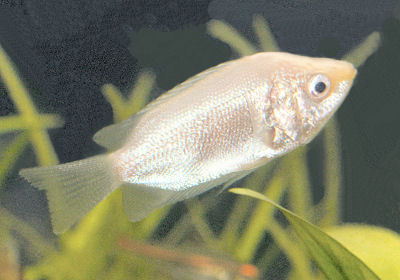
Scientific name: Trichogaster trichopterus
Common name: Blue gourami, Two/Three-spot gourami, Opaline gourami, Gold gourami, etc.
Origin: S.E. Asia
Size: Up to 6" (15cm), but usually smaller.
Tank setup: Planted tank with gentle circulation and some floating plants
Compatibility: Can be territorial with other gouramies, and sometimes with other tankmates.
Water chemistry: Not critical: soft to medium hard, pH 6.0-8.5
Temperature: 22-28oC (72-82oF)
Feeding: Omnivorous, most foods accepted
Sexing: Males have a pointed dorsal fin.
Breeding: Bubble nest builder. Pairs may become aggressive towards tankmates when spawning.
Generally easy to breed. Remove female after spawning, as the male will guard the bubble-nest and fry.
Comments: This is a hardy fish which will tolerate a range of conditions. They have been bred in several colour forms, hence the multitude of common names.
Labyrinth Fish etiketine sahip kayıtlar gösteriliyor. Tüm kayıtları göster
17 Şubat 2008 Pazar
Trichogaster Microlepis
Scientific name: Trichogaster microlepis
Common name(s): Moonlight gourami, Moonbeam gourami, Thin-lipped gourami
Origin: S.E. Asia
Size: 6" (15cm)
Tank setup: Planted tank with gentle circulation and some floating plants
Compatibility: Normally quite peaceful, but may become territorial with other gouramies or similar fish.
Water chemistry: Not critical: soft to medium hard, pH 6.2-7.8
Temperature: 25-29oC (77-84oF)
Feeding: Omnivorous, most foods accepted
Breeding: Bubble nest builder. The male will care for the fry for the first few days.
Sexing: Pelvic fins of males may show orange-red colour, in females it is yellow
Comments: Although not as colourful as other members of the genus, this is still a striking fish. A well planted tank with other peaceful and slow-swimming species is ideal.
Etiketler:
Labyrinth Fish
15 Şubat 2008 Cuma
Trichogaster Leeri, Pearl Gourami
Common name(s): Pearl gourami, Lace gourami, Mosaic gourami
Scientific name: Trichogaster leeri
Size: Up to 5" (12.5cm)
Origin: S.E. Asia: penisular Malaysia, Thailand, Borneo, Sumatra
Tank setup: Planted tank with gentle circulation and some floating plants
Compatibility: Normally quite peaceful, but may become territorial with other gouramies or similar fish.
Temperature: 23-28oC (73-82oF)
Water chemistry: Not critical: soft to medium hard, pH 6.5-8.0
Feeding: Omnivorous, most foods accepted
Sexing: Males have a pointed dorsal fin and extended fin rays on anal fin.
Males in breeding colour also show more red on the underside.
Breeding: Bubble nest builder. Pairs may become aggressive towards tankmates when spawning.
Comments: In full breeding colour, this fish is very striking and surely amongst the most beautiful of freshwater tropical fish.
Etiketler:
Labyrinth Fish
Osphronemus Laticlavius, Giant Red Fin Gourami
Common name: Giant red fin gourami, Red-tail gourami
Scientific name: Osphronemus laticlavius
Origin: S.E. Asia
Size: Up to 20" (50cm)
Compatibility: Can be territorial, combine with other large robust fish.
Tank setup: A very large tank (5x2x2' minimum for an adult), with minimal robust decor
Temperature: 22-28oC (72-82oF)
Water chemistry: Not critical: soft to medium hard, pH 6.2-7.8
Feeding: Omnivorous, almost any foods accepted - pellet foods ideal as a staple, include some green foods. May eat small fish.
Breeding: Unknown - likely to be similar to the Giant gourami (O. goramy)
Sexing: Unknown
Comments: This species was described relatively recently, in the 1990's, and has previously been rare in the aquarium trade.
Etiketler:
Labyrinth Fish
Osphronemus Goramy, Giant Gourami
Scientific name: Osphronemus goramy
Common name(s): Giant gourami, Common gourami, Goramy
Origin: S.E. Asia
Size: Up to 28" (70cm)
Tank setup: A very large tank (6x2x2' minimum for an adult), with minimal robust decor
Compatibility: Juveniles can be quite territorial, but adults become less aggressive, and can be combined with other large fish.
Temperature: Wide range tolerated: 20-30oC (68-86oF)
Water chemistry: Not critical; soft to medium hard, pH 6.2-7.8
Sexing: The dorsal and anal fins are more pointed in males
Feeding: Omnivorous, almost any foods accepted - pellet foods ideal as a staple, include some green foods.
Breeding: Reported to build a bubble nest using plant material. Eggs take about 2 days to hatch. The male will the eggs and fry.
Comments: Juveniles of this fish are fairly commonly found for sale, but it should be noted just how large this fish becomes! It will eventually require a very large tank and an excellent filtration system.
Etiketler:
Labyrinth Fish
13 Şubat 2008 Çarşamba
Macropodus Opercularis, Paradise fish
Easy to keep in larger community tanks, a dark soil and some plants bring out the colors better although it's no prerequisite. The fish are extremely hardy and will adapt to virtually every surrounding and water values. Since full grown fish can be extremely aggressiv among eachother but also towards other fish, they shouldn't be kept with fragile peacefull fish. If they start to breed in a community tank they will completely terrorise the tank, and attack all fish approaching the nest. If they attack they usually go straight for the eyes of the intruder, and sometimes you will see fish with only one eye swimming around in community tanks with M. opercularis. Since the fish jump well, the tank should be covered.
Although the fish will reproduce in community tanks, breeding is best done in a large 80 cm breeding tank with lowered waterlevel, at higher temperatures(23-25 degrees). Between 100 and 500 floating eggs are produced, after which the female should be removed. If no hiding places are available in smaller tanks the male will sometimes kill the female. Eggs will hatch in 2-4 days, depending on the temperature. Fry are extremely small and can only be fed with infusoria in the beginning.
Common name: Paradise fish
Origin: E. Asia, China, Korea, Taiwan, Hai-nan, Malakka and on Ryukyu, in slow flowing or standing, usually shallow water with dark soil. In Southern Spain and in Florida(USA) introduced populations exist.
Tank setup: Fairly large tank, with refuges for females and gentle circulation.
Compatibility: Community, but males may be aggressive.
Temperature: 13-26 degrees, but also beyond these boundaries.
Feeding: Omnivore: feed flake, frozen and live foods. Will eat all given food including small fish!
Water chemistry: Not critical; fairly soft to hard, pH 6.0-8.0
Sexing: Males have brighter colours and much longer fins than females
Breeding: Bubble nest builder. Eggs hatch in about a day and are usually guarded by the male.
Comments: Several colour forms of this species exist.
Etiketler:
Labyrinth Fish
11 Şubat 2008 Pazartesi
Helostoma Temminkii
Common name(s): Kissing gourami, Kissing fish
Scientific name: Helostoma temminkii
Size: Up to 12" (30cm), but usually much smaller (around 6"/15cm).
Origin: Southeast Asia, particularly Thailand and Java
Tank setup: A larger tank with robust plants and plenty of open swimming space.
Compatibility: Community, but can be territorial
Temperature: 22-30oC (72-86oF)
Water chemistry: Not critical: soft to very hard, pH 6.5-8.5
Feeding: Omnivorous, most foods accepted, include vegetable matter.
Sexing: The sexes are virtually impossible to distinguish.
Breeding: Higher end of the temperature range required for breeding. May build a bubblenest, there is no brood care. Eggs hatch in around 24 hours.
Comments: The mouth-locking which gives rise to the common name is actually contests of strength between males, but no damage is usually done. A golden colour variety is also available. The natural colour is greenish-grey.
Etiketler:
Labyrinth Fish
Ctenopoma Acutirostre
Scientific name: Ctenopoma acutirostre
Common name(s): Spotted climbing perch, Leopard Ctenopoma, Spotted Ctenopoma, Bushfish
Size: Up to 8" (20cm), but usually smaller.
Origin: Africa, Congo basin.
Tank setup: Planted tank with moderate water movement and lower lighting level.
Compatibility: Predatory. May be timid with larger or more aggressive fish.
Temperature: 23-28oC (73-82oF)
Water chemistry: Fairly soft, slightly acidic to around neutral (pH 6.0 -7.5)
Feeding: Carnivore; live and frozen foods, may take flake food.
Sexing: Males have spines on the body.
Breeding: Bubble-nest builder. Very soft and acidic water required. Little brood care occurs. An increase in water temperature may trigger spawning.
Comments: Not an aggressive fish, but it should not be kept with small community fish, due to its predatory habits.
Etiketler:
Labyrinth Fish
9 Şubat 2008 Cumartesi
Cinnamon Dwarf Gourami, Colisa ialia
Male Female
Common name: Dwarf gourami
Scientific name: Colisa lalia
Size: 2" (5cm)
Origin: India
Tank setup: Planted tank with gentle circulation and some floating plants
Compatibility: Normally peaceful, but may become territorial with other gouramies or similar fish.
Temperature: 22-28oC (72-82oF)
Water chemistry: Good water quality required, soft to medium hard, pH 6.5-7.5
Feeding: Omnivorous, most foods accepted, include plenty of vegetable matter.
Sexing: Males are generally larger, and more colourful; females tend to be silvery.
Breeding: Bubble nest builder. Remove female after spawning.
The male will guard the eggs and fry, and should be removed when they are free swimming.
Comments: Best kept in pairs in a peaceful, well planted aquarium. A variety of colour forms have been produced, including 'Blood red' (pictured), 'Neon blue', etc.
This gourami is a beautiful peaceful fish that is available in the blue striped variety, blood red, as well as the cobalt blue. Males are generally bigger and colourful, whereas the females are small and rather bland in colouration. Best kept in pairs, the dwarf gourami is territorial among individuals of the same species as well as other fish that resemble it.
Dwarf gouramis require good water quality in a planted aquarium. They do best on good quality flake, as well as live and frozen food. They make an interesting tank mates to delicate species and are interesting to watch as they swim around chasing each other. The dwarf gourami is easily bred. Bred in a 40l tank, filled halfway, with lots of floating plants. Increase the water temperature slightly, and watch as the male begins constructing a bubble nest. The male wraps around the female and spawning take place. The female must be removed, as the male`s paternal instinct takes over, as he may turn on her and even kill her.
Etiketler:
Labyrinth Fish
Kaydol:
Kayıtlar (Atom)